EDS 2026 Conference Programme

Built Around Design Engineering

The EDS conference has been completely revamped for 2026, with a sharper focus on the technologies, challenges and decisions shaping Mechanical, Electronic and Embedded Design.

Developed with the EDS Advisory Board and the editorial teams behind The Engineer, New Electronics and Eureka!, the programme brings together practical insight, technical expertise and real-world engineering experience from across industry.

Full conference programme below

    View The Full Programme:

Loading
10:15
  1. 30 mins
    • New Electronics
    As PCB designs become increasingly complex, many engineering teams still rely on disconnected processes that discover issues too late in the development cycle. This presentation explores a practical analysis-driven PCB design methodology that integrates requirements, constraints, signal integrity, power integrity, implementation, and manufacturing considerations throughout the design process. Attendees will learn how early verification and structured design practices can reduce risk, improve design quality, and increase the likelihood of first-pass success.
10:30
  1. 30 mins
    • Eureka

    Competition to bring increasingly capable vehicles to market has never been more intense. Development times are reducing, vehicle complexity is increasing and global market pressures demand that engineering teams make the right decisions earlier than ever. At Lotus Engineering, advanced simulation and objective development methods are combined with decades of vehicle dynamics experience to establish the fundamental character and capability of a vehicle long before the final stages of physical development.

    But what happens when the simulation says the car is good? This presentation explores the critical relationship between objective engineering and expert subjective assessment: when the driver enters the development process, what an expert vehicle assessor is actually evaluating, and how subjective observations are translated back into engineering parameters and physical changes. Using the Lotus approach to vehicle dynamics development, John will explore why this human-in-the-loop development remains essential in extracting the last 5% — transforming a technically capable vehicle into one that communicates with its driver, inspires confidence and, ultimately, is engineered For the Drivers.

10:45
  1. 45 mins
    • The Engineer
    As artificial intelligence moves beyond software algorithms into real-world hardware, 'Physical AI' and autonomous systems are reshaping the UK’s industrial landscape. Bridging the gap between pioneer R&D and commercial deployment, this session moves past the hype of humanoid marketing videos to examine the actual state of play, breakthrough technologies, and commercial realities of UK robotics today.
  2. 30 mins
    • New Electronics

    As process nodes shrink and modern architectures grow exponentially complex, semiconductor design has reached a critical tipping point. The surging demand for advanced CPUs, GPUs, and AI accelerators requires a fundamental shift in how chips, packages, and entire systems are engineered. In this insightful fireside chat, Neil Tyler sits down with Madhuparna Datta to explore how more than two decades of EDA evolution have paved the way for the next major leap in semiconductor innovation.

    The conversation delves into the transformative role of artificial intelligence across the entire design lifecycle, from AI-driven design-space exploration, timing closure, and signoff, to system-level optimization spanning silicon, packaging, and board layout. Drawing on real-world customer deployments, Madhuparna will share how AI-enabled tools are drastically accelerating time-to-market while improving silicon quality. Crucially, the session addresses the evolving role of the engineer: will AI act as the ultimate design co-pilot, and what core skills will the next generation need to thrive in an AI-assisted environment?
11:00
  1. 30 mins
    • Eureka
    An Exclusive Fireside Chat with Willem Toet, F1 Aerodynamics Expert & Director, Aero Research Partners.
11:15
  1. 30 mins
    • New Electronics

    Modern embedded systems depend on hardware, firmware and software working together as one system. Yet these disciplines are often developed using different processes, tools, terminology and lifecycle timescales. The resulting gaps can create unclear ownership, incompatible interfaces, configuration mismatches and costly integration problems that appear late in development.

    This talk will present practical ways to bridge the systems-software interface from early architecture through integration and verification. Using an embedded-system example, it will show how teams can align system intent, make informed hardware-software allocation decisions, define and manage critical interfaces, maintain configuration consistency and test incrementally. Attendees will leave with practical questions and techniques they can apply to identify interface risks earlier and improve engineering delivery.

11:30
  1. 30 mins
    • The Engineer

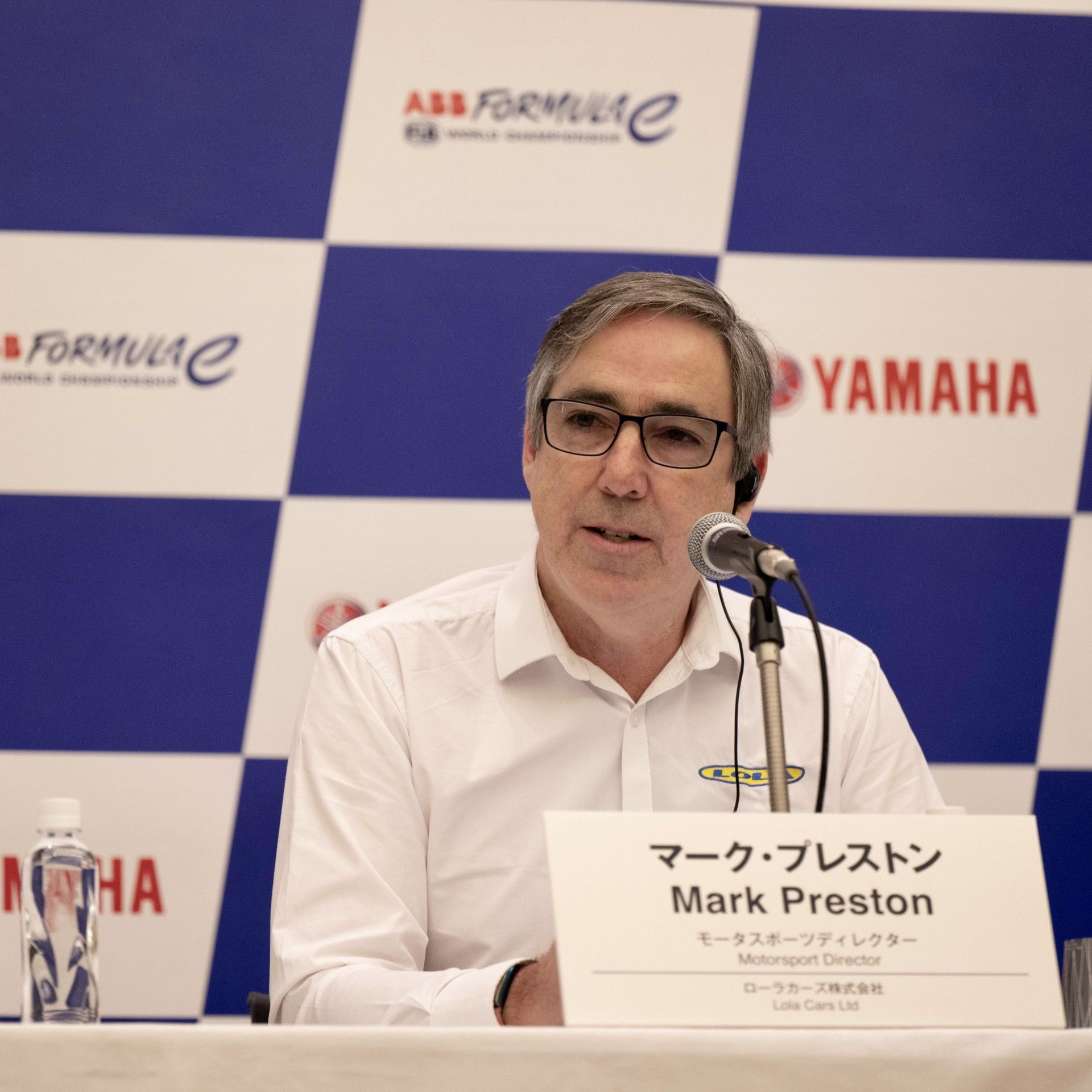
    From five-time World Championship-winning Team Principal to leading Lola Cars’ return to elite motorsport, Mark Preston has built a career at the intersection of raw performance, cutting-edge engineering, and fast-paced decision-making. In this fireside chat, Mark explores how Lola is leveraging the latest artificial intelligence capabilities, advanced driver-in-the-loop simulation, and sustainable materials to accelerate its next-generation electric (Formula E) and hydrogen racing programs.

    Drawing on 30 years of leadership across McLaren, Super Aguri F1, StreetDrone, and Lola Yamaha, Mark shares how pairing physical vehicle dynamics with digital tools enables high-performance teams to innovate faster, de-risk complex powertrains, and maintain a competitive edge.
  2. 30 mins
    • Eureka
    Multi-physics simulation and machine learning can extend engineering design beyond geometry towards earlier prediction of product performance. This talk will explore how design choices, material behaviour, and manufacturing conditions interact to influence the properties of the finished product, and how digital models can help engineers understand these relationships before committing to repeated physical prototyping and testing. The broader workflow connects design, simulation, prediction, validation, and refinement, enabling more informed engineering decisions and more targeted physical validation.
11:45
  1. 30 mins
    • New Electronics

    If you have the good fortune of always passing EMC emissions testing first time, then read no further. If, however, you have experienced an EMC failure that has led to a difficult redesign or a lengthy investigation, this talk is for you.

    Circuit diagrams describe the intended electrical behaviour of a product, but only within a range of operating conditions. The components we use are not ideal, and at higher frequencies their parasitic elements can significantly change the way currents flow. These effects can be measured and incorporated into circuit simulations—but how do we account for the physical structures, interconnections and unintended paths within the product itself? And how can we assess the likely EMC performance before reaching the test laboratory?

    This talk explores the often surprising coupling and decoupling paths through which high-frequency energy can travel. It will demonstrate how seemingly insignificant components, connections and physical structures can create unexpected current paths, and how these can contribute to EMC emissions.

    The aim is to provide practical insight that will help you identify potential EMC problems earlier, understand their causes, and make more informed EMC risk assessments during the design process.

12:00
  1. 30 mins
    • The Engineer

    Engineering is more human-centric than most people realise, and that’s precisely where AI falls down.

    Skip the tool demos and let’s tackle the real question; what happens to engineers over the next five to ten years?

    Join Dunstan Power as he examines where AI genuinely helps, where it fails with total confidence, and who really benefits when "efficiency" means job losses.

    Expect straight talking on the "boomer" optimists and "gloomer" doom-mongers, and where reality actually sits. 

    Attendees will leave with a practical framework for their own engineering teams, clarity on which skills matter most, and a confident answer to why engineers still matter.

  2. 30 mins
    • Eureka

    Artificial intelligence is transforming product development faster than any technology since the introduction of 3D CAD. In just a few years, AI has evolved from answering engineering questions to writing code, generating CAD models, and assisting engineers throughout the design process. But despite the excitement surrounding text-to-CAD, creating geometry is only the first step. Engineering has never been about geometry alone - it is about capturing, understanding, and evolving engineering intent.

    This session explores the next generation of AI-driven engineering, where intelligent agents move beyond creating shapes to understanding design intent, manufacturing requirements, simulation results, company standards, and product data. We'll separate hype from reality, examine where AI is delivering measurable value today, and discuss why the future belongs to AI that works within the engineering process - not around it.

    Attendees will gain a practical understanding of the technologies driving this transformation, including large language models (LLMs), retrieval-augmented generation (RAG), engineering agents, code generation, and model-aware AI. We'll explore why editable, parametric models remain the foundation of engineering, how AI is becoming a collaborative engineering partner rather than a replacement for designers, and why engineering context is rapidly becoming AI's greatest competitive advantage.

    Finally, we'll look ahead to a future where AI doesn't simply generate CAD, rather it creates reusable engineering knowledge, automates complex design tasks, learns from existing products, and accelerates innovation while keeping engineers firmly in control. As AI becomes embedded within cloud-native engineering platforms, organizations will unlock new levels of productivity, collaboration, traceability, and design intelligence that standalone AI tools simply cannot achieve.

    Whether you're evaluating today's AI tools or building a long-term digital engineering strategy, you'll leave with a practical framework for understanding where AI creates value today, where it's headed next, and why the future of engineering isn't text-to-product - it's AI accelerating engineers within the engineering system of record.

    Attendee Takeaways

    • Understand the evolution from text-to-CAD to AI-driven engineering.
    • Learn where today's AI delivers real engineering value - and where it falls short.
    • Discover how engineering agents, code generation, and model-aware AI are reshaping product development.
    • Understand why engineering intent, editable parametric models, and product context are essential for trustworthy AI.
    • See why cloud-native engineering platforms are enabling the next generation of AI-powered product development.
12:15
  1. 30 mins
    • New Electronics

    Science fiction has long imagined machines that feel: aircraft that sense the air flowing over their wings, vehicles aware of every load they carry, structures that report damage before it becomes failure. Engineering reality has lagged behind, relying on a handful of discrete sensors wired into structures that are otherwise blind. Hyve Dynamics is closing that gap with an ultra-thin, flexible sensing skin that bonds directly to a surface. It measures pressure, suction, temperature and strain across the whole area in real time, and it is designed as a platform onto which further sensing modalities can be integrated. In effect, it is a nervous system for machines, and the first layer of truly adaptronic structures.

    This talk goes under the skin. Juan Sebastian Conde, Co-Founder and chief scientist, will show how a single conformable skin can replace hundreds of drilled pressure taps and discrete sensors. It can be installed in hours rather than weeks, without modifying the structure, and it captures a complete picture of what the surface experiences rather than a handful of points. He will outline the electronics that turn that surface into a live data stream. He will then explore applications across aerospace, motorsport, wind energy, robotics and composite structures, from faster wind-tunnel and flight testing to real-time structural health monitoring, damage detection and digital twins fed by live data. The session closes with a look ahead to machines and structures that don't just sense their environment but respond and adapt to it.

12:30
  1. 60 mins
    • The Engineer
  2. 60 mins
    • Eureka
12:45
  1. 45 mins
    • New Electronics
13:30
  1. 60 mins
    • The Engineer
    The UK is facing a generational crunch, with over a million young people falling out of the education-to-employment pipeline just as the demand for advanced hardware engineers reaches an all-time high. This session will discuss practical strategies for building non-traditional pathways, establishing robust apprenticeship networks, and creating early-career environments that attract top talent. Young professionals will also discuss first-hand their own experiences.

  2. 60 mins
    • Eureka

    Offshore wind is set to become the backbone of Europe's clean energy system, requiring the deployment of thousands of turbines and thousands of kilometres of supporting electrical infrastructure. This unprecedented investment presents a significant opportunity for UK engineering and manufacturing businesses, with UK offshore wind supply chain markets targeted by the UK Offshore Wind Industrial Growth Plan (IGP) expected to be worth £92 billion annually by 2040.

    This session will explore the priority areas identified as growth opportunities by UK Government and industry through the IGP, highlighting where support and investment are being targeted across the offshore wind sector. Attendees will gain insight into the guidance, programmes, and resources available to help UK engineering firms position themselves within these strategically important markets. The talk will also examine the technical and commercial realities of developing products for offshore wind applications. From designing large-scale structures and electrical systems capable of operating reliably for decades in some of the world's harshest environments, to understanding how engineering decisions influence customer value, project costs, and competitiveness, success requires much more than technical excellence alone.

  3. 30 mins
    • New Electronics
14:00
  1. 30 mins
    • Eureka

    Modern engineering systems increasingly face failure modes driven by stochastic physical phenomena that are difficult to detect using conventional signal processing techniques. DC arc faults are a representative example, as their highly variable behaviour, dependence on operating conditions, and transient nature make reliable detection extremely challenging. To address this challenge, we developed a data-driven fault detection framework based on an extensive experimental dataset and machine learning-assisted parameter optimisation, enabling robust identification of arc-fault signatures under realistic operating conditions.

    A key challenge was translating algorithms originally developed in MATLAB into a deployable embedded solution. The final implementation runs in real time on a standard STM32 microcontroller without the use of dedicated AI accelerators, requiring extensive model optimisation, memory reduction, and adaptation to hardware constraints while maintaining detection performance. Using real-world DC arc fault applications from both the residential and aerospace sectors, this presentation demonstrates how complex physical phenomena can be transformed into practical, robust, and cost-effective embedded protection systems.
  2. 30 mins
    • New Electronics

    Great designs rarely fail because the engineering was wrong. More often, reality gets in the way: components become obsolete, costs rise, suppliers change, requirements evolve, and budgets get tighter.

    This talk explores what happens when a design moves from the drawing board into the real world — and how engineers can design, adapt and redesign for the challenges that inevitably follow.

    From making the right choices at the start of a product’s life to dealing with obsolescence years later, we’ll look at the trade-offs between performance, cost, availability, reliability and longevity. Through practical examples and lessons learned, the talk will explore how constraints can drive better engineering decisions, and how a thoughtful approach to lifecycle design can reduce the cost and disruption of change.

14:30
  1. 30 mins
    • The Engineer
  2. 30 mins
    • Eureka

    For most of the space age, spacecraft have been designed around a simple assumption: everything must be manufactured, assembled and tested on Earth before surviving launch as a complete system. Emerging capabilities in robotic servicing, in-space assembly and in-space manufacturing are beginning to challenge that assumption, creating new possibilities for how spacecraft and large structures are designed, built and operated.

    This presentation will explore three areas where engineering design is beginning to move beyond the constraints of launch. First, how designing spacecraft for in-space servicing could enable repair, upgrade and life extension; second, how designing specifically for robotic assembly could enable structures larger and more adaptable than can be launched conventionally; and finally, how manufacturing directly in space could exploit the space environment and ultimately remove some launch constraints altogether. Drawing on current developments and practical engineering challenges, the talk will consider what engineers need to do differently when launch is no longer the end of the manufacturing process.

  3. 30 mins
    • New Electronics
    REWIRE is accelerating (ultra-)wide bandgap power semiconductor innovation, connecting researchers, industry and end users across the UK semiconductor ecosystem. This talk will introduce REWIRE, its approach to supporting innovation and some of the activities and collaborative projects underway across the programme. Drawing on examples from REWIRE’s research projects and industry engagement I will explore how stronger links between research and industry can help translate advances in semiconductor technology into high-value products and applications, while strengthening UK sovereign capability and building a resilient, globally competitive supply chain.
15:30
  1. 30 mins
    • The Engineer
    Product-as-a-Service (PaaS) is about more than recurring revenue. By maintaining, upgrading and improving products throughout their working lives, manufacturers can remove the traditional replacement decision—the moment customers reconsider their supplier. This seminar explores how Product-as-a-Service can build brand stickiness, strengthen relationships and support sustainability.
10:15
  1. 30 mins
    • The Engineer
    Jorge will take a deep dive into practical strategies for engineering managers to accurately forecast and streamline the total cost of ownership (TCO) for heavy simulation and AI workloads. Topics covered include using workload data, infrastructure planning and procurement insight to reduce unnecessary spend, helping organisations invest in the capacity they actually need.
10:30
  1. 30 mins
    • New Electronics

    Over the past 40-or-so years there has been a large trend in digitalisation of electronics, from complex systems to relatively simpler sensing and measurement nodes.  Grid connect technology has largely been unimpacted over this period, until relatively recently as the demand for more power from AI Data Centres in particular, plus the adoption of more Green Energy production (PV and Wind) for direct-to-grid connection has put demands on the connection technology; essentially a low frequency transformer. 

    The Solid State Transformer (SST) is a new way to connect to the Medium Voltage transmission network, enabling both up-link (energy to the grid) and down-link (energy from the grid) to be implemented in both a reduced physical size and more controllable and reactive (to load demand) system. 

    This primer presentation is a look at the methods and some of the technologies used in implementing of what is essentially a digital transformer for modern power connection.  Recent SST interest has been spurred-on by the convergence of new energy production, Electric Vehicle charging and Battery Energy Storage Systems and AI Data Centre demands which has brought together technologies from these separate systems into a cohesive new option for the Low Voltage side power distribution.  The primer also looks at how these new energy systems link together with the SST to provide a new power paradigm for distributed energy supply.

  2. 60 mins
    • Eureka

    Got your next product idea, only to send it for CAD and find yourself revising it again and again, wasting time and budget along the way? This Panel session shows you how to break that cycle. Our product Design experts will share how getting DFM from the very first concept, before pen hits paper, helps you catch costly issues and save headaches before they happen. We’ll touch on issues such as design lifecycle choices, Cost estimates, recyclability and sustainable polymers which can shape your timescales, costs and end outcome

10:45
  1. 30 mins
    • The Engineer

    Delivering mission-critical technology under extreme pressure requires a unique balance of speed, precision, and strategic leadership. In this exclusive fireside chat, Bob Bhatti, Head of Mechanical Engineering and Design at Formula 1, reflects on his 30-year career journey from foundational engineering to leading world-class technical teams.

    Bob will explore how F1 is tackling one of its most ambitious challenges yet: its Future Race Operations (FRO) program and Net Zero 2030 strategy, detailing how global freight logistics, remote operations, and trackside engineering are being re-engineered to cut emissions without compromising performance. Finally, he will share insights on inspiring the next generation of resilient, diverse engineering talent through industry-university collaboration.
11:00
  1. 30 mins
    • New Electronics
    The talk will cover practical guidance on patents and registered designs for hardware and electronics, from PCB layouts and custom silicon/IC designs through to embedded algorithms and physical enclosures. This includes advice on the value of a patent or design for the latest technologies, including how to broadly protect a specific circuit or chip architecture, and trade-offs between trade secrets and patents for advanced fabrication processes. A discussion on the possibility of protecting software, including AI and other algorithms, will touch on common misconceptions and tips for what may be patentable. High levels of package integration, particularly with xPUs and stacked memory dies in a 3D package offer a plethora of opportunities for protecting various hardware, interconnect, chip architecture and package configurations as well as the methods of operating such advanced devices, and the talk will provide some guidance on how even small changes to a semiconductor package may yield patentable subject matter. The role of registered designs, which may offer complimentary protection to patents will be discussed particularly in the context of protecting the appearance of visually aesthetic hardware and software.
11:15
  1. 30 mins
    • The Engineer
    Explore why transformative technologies develop slowly before reaching a tipping point—and how AI is compressing this cycle, causing successive waves of innovation to overlap. Drawing on historical examples, future scenarios and real-world AI breakthroughs, this talk reveals how organisations can recognise emerging opportunities, overcome barriers and turn experimentation into lasting value. Attendees will leave with practical insights for navigating uncertainty, taking measured risks and shaping the next curve rather than waiting for it.

11:30
  1. 30 mins
    • Eureka
    The Cyber Resilience Act (CRA) introduces new cybersecurity requirements for products sold in the EU. This talk provides a practical guide to understanding the regulation and explains what you need to do if you would like to sell, import or distribute digital products in the EU market.
  2. 30 mins

    • New Electronics

    Moving a semiconductor technology from a successful laboratory demonstration to a reliable, scalable commercial product is not a straightforward process. As technologies move beyond R&D, engineering challenges increasingly emerge at the interfaces between fabrication, packaging, thermal management, electronics, testing and qualification. Processes that work at prototype level must become repeatable and manufacturable, while performance, yield, reliability, cost and supply-chain constraints begin to shape engineering decisions. At the same time, successful commercialisation requires more than proving that the technology works: product design, customer and market requirements, business strategy, cost, regulatory and international trade requirements, and building the right team - all need to be considered early to ensure there is a realistic pathway from technology to a commercially viable product.

    Based on real-world examples and insights from Scotland’s Critical Technologies Supercluster and the Product Design Scotland network, this presentation will explore both the technical and commercial challenges encountered on the journey from semiconductor R&D to market-ready hardware products.  The presentation will also highlight how closer collaboration between technology developers, product designers, manufacturers, integration specialists and wider ecosystem can reduce risk, avoid costly redesign and create more effective pathways from promising technology to sustainable operations.

11:45
  1. 30 mins
    • The Engineer

    For Chief Engineers, Design Leads, and Product Developers, the pressure to shorten time-to-market is relentless. Yet, one of the biggest friction points in product development remains the gap between CAD models on the design desk and practical execution on the shop floor. Late-stage redesigns, unresolvable DFM bottlenecks, and supply chain delays costly stall innovation right before launch.

    In this practical session, Andrea outlines how early supplier engagement transforms the DFM cycle from a hurdle into a competitive advantage. Discover how leveraging the UK’s vibrant SME manufacturing network early in the design process helps engineers resolve manufacturability challenges, optimize component costs, and build agile, resilient UK supply chains, ensuring your products transition seamlessly from concept to production.

12:00
  1. 30 mins
    • Eureka

    Right-to-repair is often presented as a challenge for technology companies: After years of R&D, making components replaceable and providing access to repair information can feel like handing over your intellectual property, product security and commercial advantage. This talk will challenge that assumption, exploring how repairability and modularity can instead be incorporated into the design process from the outset, while protecting the aspects your product that ought to stay yours. 

    Drawing on my experience designing and manufacturing modular, repairable computer hardware through Douglas Hardware, I’ll look at the engineering principles behind products that are designed to be maintained, upgraded and repaired rather than discarded. I’ll explore how modular architectures can extend product lifespans, reduce waste, improve customer relationships and create new commercial opportunities, while using a combination of mechanical, electrical and software design to keep your proprietary technology protected. Ultimately, the talk will argue that repairable and modular technology isn't simply a response to regulation or consumer pressure, instead it represents a fundamentally better direction for product design and an opportunity for companies willing to rethink how they build technology.

  2. 30 mins
    • New Electronics
    Graphene is starting to arrive, quietly, in more forms than most people expected. This talk covers which forms you are likely to encounter, what to expect from them and the sectors they might disrupt, what you shouldn't expect to see and why the wonder material everyone talked about never really existed in the first place. 
12:15
  1. 45 mins
    • The Engineer
    Design engineers often create brilliant concepts on the bench that become a nightmare to manufacture due to material scarcity, tight tolerances, or supply chain fragmentation. This panel looks at the modern reality of Design for Manufacturing (DFM), exploring how OEMs and tier suppliers can use collaborative data and early-stage integration to stop a design from stalling when moving from early R&D to full production.
12:30
  1. 60 mins
    • Eureka
  2. 60 mins
    • New Electronics
13:00
  1. 30 mins
    • The Engineer

    This talk will introduce STEP, the UK’s programme to design and build a prototype fusion power plant, and explain the scale of the industrial challenge involved. It will explore the development of advanced materials capable of operating in extreme environments, alongside the specialist skills, technologies, manufacturing capabilities and supply chains needed to deliver fusion energy.

    It will also consider how investment in these capabilities can create wider economic value—positioning UK companies to compete in an emerging global fusion energy market while benefiting other advanced industries.

13:30
  1. 30 mins
    • Eureka
    In 2022 Swytch launched a market-leading eBike battery the size of a power bank. Getting there meant packing 36V and 20A peak power into a pocket-sized pack with a 5mm-deep connector, then making it survive 5,000 connection cycles, drop, vibration, salt-spray and 1,000 charge cycles — at a price that would sell 100,000 units.

    This is the unvarnished engineering story behind that product: six full-system prototype loops, a custom BMS that overheated in testing, EMC failures from packing too much into too little space, a mount architecture designed "user-friendly first" that had to be thrown away and rebuilt "robust first", and a DFM stage that resurrected problems the team thought were solved.

    Dmitro will also share the lessons the R&D numbers taught him: why one product generation's development budget was an order of magnitude bigger than the last (and why more budget didn't mean better outcomes), when custom beats off-the-shelf, co-developing with suppliers in China versus building an on-shore R&D lab, and how a supply-chain crisis reshaped his development philosophy.

    Design engineers and R&D leads will leave with a practical framework for scoping custom development, testing to failure, and shipping before perfection
  2. 30 mins
    • New Electronics

    Emerging 800 V DC architectures for AI data centres are driving new power system and device requirements. The data centre power distribution is working on removing power conversion stages and supplying high voltage closer to the racks. To meet this, the high-voltage PSU is being required to shrink, and become more efficient, while also converting 800 V down to 50, 12, or even six, all while maintaining safety isolation. This in turn demands the power device switching at higher frequencies while improving the figure of merit (gate charge, output charge, etc).

    This is where GaN shines as the correct power device for the future. With much lower gate drive requirements than SiC or silicon, gate driving losses are reduced. With compact, low-profile, top-side-cooled packages, the devices can run cooler at higher power levels. CGD's monolithic ICeGaN® technology goes even further, integrating more functionality onto the device and therefore fewer external parts. It includes system monitoring through features like DESAT and temperature sensing to ensure reliability.  Together, these advantages deliver exactly what next-generation PSUs need: extreme power density and efficiency at 800V.
  3. 30 mins
    • The Engineer

    By tracing my journey I’ll illustrate and expand upon how a product designer works, why should you engage with a product design graduate, and what value could a product designer add to your business and how to do it.

14:00
  1. 30 mins
    • The Engineer

    Organisations are increasingly investing in data, automation and AI to optimise performance across their operations. Utilising predictive maintenance and real-time condition monitoring, businesses now have unprecedented visibility into how their machines operate.

    But this raises an important question: Are we applying the same level of insight and precision to understanding our people? If we can design technical systems to work more efficiently, then surely we can do the same thing for our people-based systems.

    This talk explores how organisations can extend the same data-driven thinking we use in engineering and operations to the workforce, and provides practical ways to gain better understanding of staff experience, engagement, wellbeing, and performance.

  2. 30 mins
    • New Electronics
    Learn what Physical AI is, understand how it differs from data centre AI, and why it is so relevant now. Explore the factors to consider when adding AI to your product, including tool and device selection. Leave with some pragmatic guidance for your next steps.
  3. 30 mins
    • Eureka

    Warwick Concrete Printing (WCP) is a multidisciplinary, student-led initiative launched in 2023 to design, develop, test and refine a concrete 3D printing system from the ground up. Now entering its fourth consecutive year, the project has evolved through multiple technical and interdisciplinary challenges, resulting in the development of an optimised concrete mix design and an open-hardware printing architecture.

    This talk will explore WCP’s journey from its initial concept through to its current state, highlighting not only the technical challenges of developing a concrete 3D printing system, but also the opportunities of bringing together students and expertise from different engineering disciplines: What happens when a civil engineer is asked to wire and programme a CNC controller? Can an automotive engineer carry out a life-cycle assessment of a concrete extrusion system?

    And, perhaps most importantly, when developing a concrete 3D printer from scratch, should we start with the concrete mix formulation or the hardware design? Through these questions, the talk will reflect on the technical development of WCP, the dynamics of interdisciplinary engineering teams, and the value of learning by building, testing and iterating.

    The talk will conclude with perhaps the most important question of all: where do we go next?

14:30
  1. 30 mins
    • The Engineer
    Deploying new PLM infrastructure often fails not through technical shortcomings, but through resistance on the shop floor and engineering bench. Drawing on real-world enterprise deployments, this session delivers a practical framework for de-risking complex digital transformations, building trust across cross-functional teams, and securing genuine engineer buy-in from day one.