Embedded Design

Eureka!
Theatre

The home of Embedded Design insight at EDS.

Explore the systems, software and technologies behind intelligent products, from embedded hardware and firmware to AI, connectivity, IoT and security-by-design.

Brought to you by

Embedded engineering in focus

Eureka! brings its specialist editorial perspective to EDS 2026, helping shape a dedicated conference programme for engineers working across Embedded Design.

Across two days, the Eureka! Theatre explores the hardware, software and connected technologies behind intelligent products, bringing together technical specialists and industry expertise from across embedded engineering.

Across the programme

Embedded hardware and firmware, AI at the edge, connected systems, IoT, cybersecurity, hardware IP protection, software integration and security-by-design.

Explore the Eureka! Theatre View the full Embedded Design conference programme below.

The Eureka! Theatre Programme:

Loading
10:30
  1. 30 mins
    • Eureka

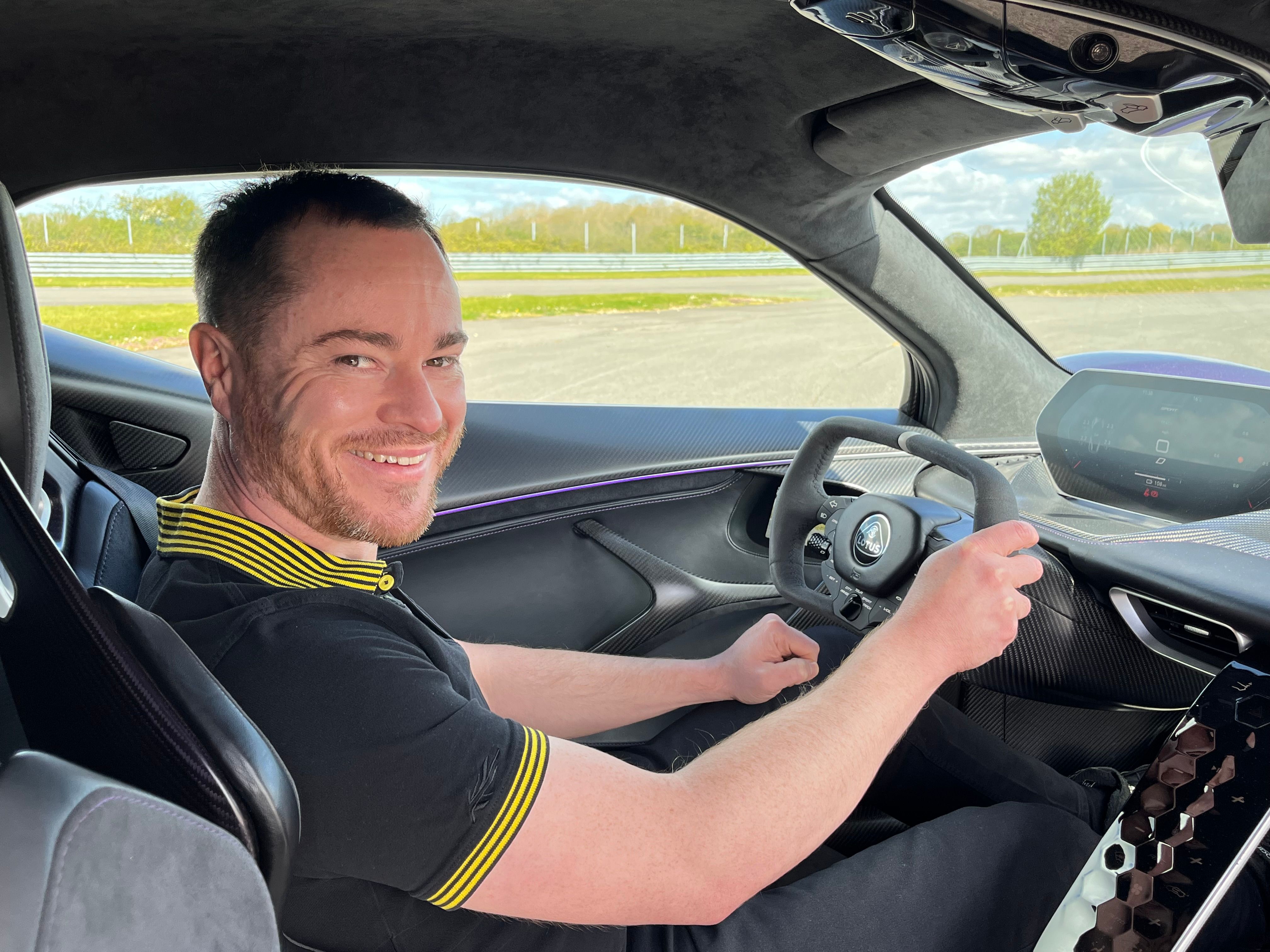
    Competition to bring increasingly capable vehicles to market has never been more intense. Development times are reducing, vehicle complexity is increasing and global market pressures demand that engineering teams make the right decisions earlier than ever. At Lotus Engineering, advanced simulation and objective development methods are combined with decades of vehicle dynamics experience to establish the fundamental character and capability of a vehicle long before the final stages of physical development.

    But what happens when the simulation says the car is good? This presentation explores the critical relationship between objective engineering and expert subjective assessment: when the driver enters the development process, what an expert vehicle assessor is actually evaluating, and how subjective observations are translated back into engineering parameters and physical changes. Using the Lotus approach to vehicle dynamics development, John will explore why this human-in-the-loop development remains essential in extracting the last 5% — transforming a technically capable vehicle into one that communicates with its driver, inspires confidence and, ultimately, is engineered For the Drivers.

11:00
  1. 30 mins
    • Eureka
    An Exclusive Fireside Chat with Willem Toet, F1 Aerodynamics Expert & Director, Aero Research Partners.
11:30
  1. 30 mins
    • Eureka
    Multi-physics simulation and machine learning can extend engineering design beyond geometry towards earlier prediction of product performance. This talk will explore how design choices, material behaviour, and manufacturing conditions interact to influence the properties of the finished product, and how digital models can help engineers understand these relationships before committing to repeated physical prototyping and testing. The broader workflow connects design, simulation, prediction, validation, and refinement, enabling more informed engineering decisions and more targeted physical validation.
12:30
  1. 60 mins
    • Eureka
13:30
  1. 60 mins
    • Eureka

    Offshore wind is set to become the backbone of Europe's clean energy system, requiring the deployment of thousands of turbines and thousands of kilometres of supporting electrical infrastructure. This unprecedented investment presents a significant opportunity for UK engineering and manufacturing businesses, with UK offshore wind supply chain markets targeted by the UK Offshore Wind Industrial Growth Plan (IGP) expected to be worth £92 billion annually by 2040.

    This session will explore the priority areas identified as growth opportunities by UK Government and industry through the IGP, highlighting where support and investment are being targeted across the offshore wind sector. Attendees will gain insight into the guidance, programmes, and resources available to help UK engineering firms position themselves within these strategically important markets. The talk will also examine the technical and commercial realities of developing products for offshore wind applications. From designing large-scale structures and electrical systems capable of operating reliably for decades in some of the world's harshest environments, to understanding how engineering decisions influence customer value, project costs, and competitiveness, success requires much more than technical excellence alone.

14:00
  1. 30 mins
    • Eureka

    Modern engineering systems increasingly face failure modes driven by stochastic physical phenomena that are difficult to detect using conventional signal processing techniques. DC arc faults are a representative example, as their highly variable behaviour, dependence on operating conditions, and transient nature make reliable detection extremely challenging. To address this challenge, we developed a data-driven fault detection framework based on an extensive experimental dataset and machine learning-assisted parameter optimisation, enabling robust identification of arc-fault signatures under realistic operating conditions.

    A key challenge was translating algorithms originally developed in MATLAB into a deployable embedded solution. The final implementation runs in real time on a standard STM32 microcontroller without the use of dedicated AI accelerators, requiring extensive model optimisation, memory reduction, and adaptation to hardware constraints while maintaining detection performance. Using real-world DC arc fault applications from both the residential and aerospace sectors, this presentation demonstrates how complex physical phenomena can be transformed into practical, robust, and cost-effective embedded protection systems.
14:30
  1. 30 mins
    • Eureka

    For most of the space age, spacecraft have been designed around a simple assumption: everything must be manufactured, assembled and tested on Earth before surviving launch as a complete system. Emerging capabilities in robotic servicing, in-space assembly and in-space manufacturing are beginning to challenge that assumption, creating new possibilities for how spacecraft and large structures are designed, built and operated.

    This presentation will explore three areas where engineering design is beginning to move beyond the constraints of launch. First, how designing spacecraft for in-space servicing could enable repair, upgrade and life extension; second, how designing specifically for robotic assembly could enable structures larger and more adaptable than can be launched conventionally; and finally, how manufacturing directly in space could exploit the space environment and ultimately remove some launch constraints altogether. Drawing on current developments and practical engineering challenges, the talk will consider what engineers need to do differently when launch is no longer the end of the manufacturing process.

15:00
  1. 30 mins
    • Eureka

    Standard systems engineering and product development processes treat requirements decomposition, prototype development stages, and design for excellence, including compliance, reliability, service and manufacturing as sequential activities. Competitive platform cadence (12–18 month generations) doesn't allow that, so these requirements have to be developed and traded off concurrently against a shared architecture and requirements baseline. This talk covers how systems engineering makes that concurrent work, across key focus areas.

11:30
  1. 30 mins
    • Eureka
    The Cyber Resilience Act (CRA) introduces new cybersecurity requirements for products sold in the EU. This talk provides a practical guide to understanding the regulation and explains what you need to do if you would like to sell, import or distribute digital products in the EU market.
12:30
  1. 60 mins
    • Eureka
14:30
  1. 30 mins
    • Eureka

    Right-to-repair is often presented as a challenge for technology companies: After years of R&D, making components replaceable and providing access to repair information can feel like handing over your intellectual property, product security and commercial advantage. This talk will challenge that assumption, exploring how repairability and modularity can instead be incorporated into the design process from the outset, while protecting the aspects your product that ought to stay yours. 

    Drawing on my experience designing and manufacturing modular, repairable computer hardware through Douglas Hardware, I’ll look at the engineering principles behind products that are designed to be maintained, upgraded and repaired rather than discarded. I’ll explore how modular architectures can extend product lifespans, reduce waste, improve customer relationships and create new commercial opportunities, while using a combination of mechanical, electrical and software design to keep your proprietary technology protected. Ultimately, the talk will argue that repairable and modular technology isn't simply a response to regulation or consumer pressure, instead it represents a fundamentally better direction for product design and an opportunity for companies willing to rethink how they build technology.